Our method
AMTS Maths teaches children to think instead of memorising answers. This page explains how, in plain words for parents.
Why we don't ask children to memorise
A child who memorises a formula can solve the same kind of problem again. A child who understands why can work out a problem they have never seen before.
At AMTS, children solve one problem in several ways. It grows their problem-solving skill and helps them stop being afraid of hard problems.
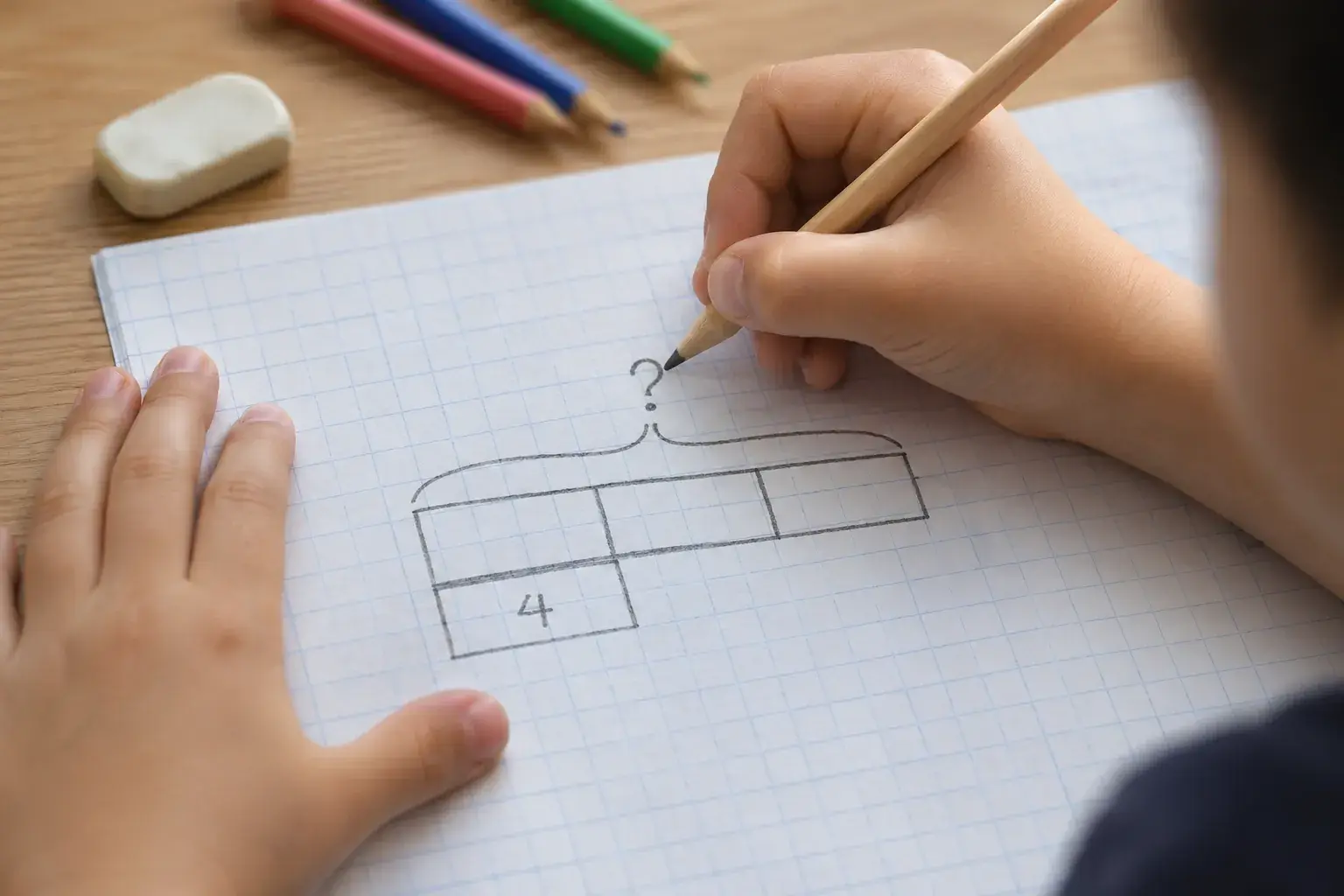
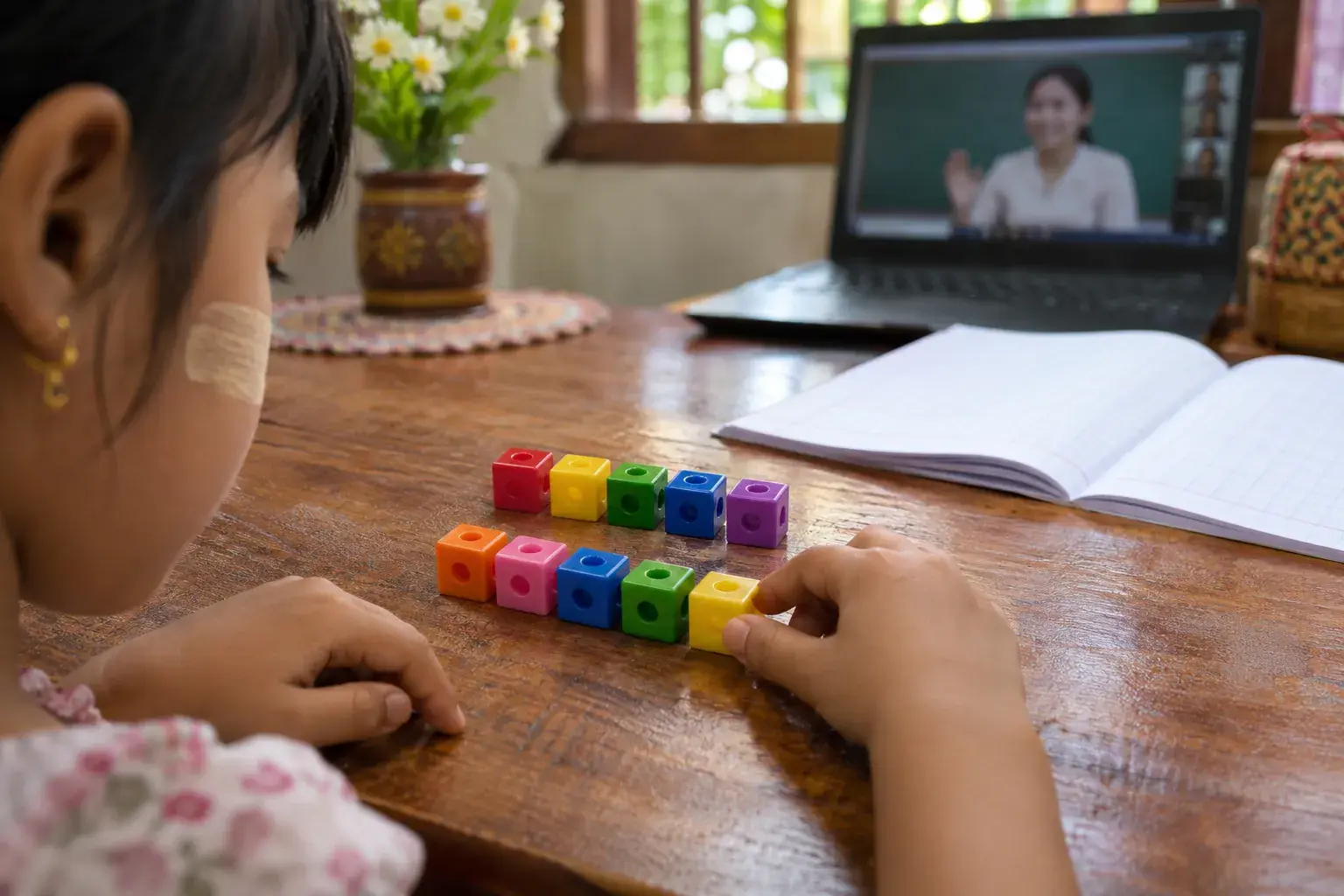
From objects, to pictures, to numbers
- 1
Objects
Children start with things they can hold and move, like blocks or marbles.
- 2
Pictures
They draw their thinking as bar models and number lines.
- 3
Numbers
Once they understand, they move to numbers and symbols.
To be confirmed This is the general Singapore Maths approach. AMTS will confirm how it is used in its classes.
What Cambridge and Singapore Maths mean
Singapore Maths
Singapore Maths is generally known for teaching in three steps (real objects, then pictures, then numbers), for bar models that make word problems visible, and for making sure children understand a topic before moving on.
Cambridge Primary Mathematics
Cambridge Primary Mathematics is a primary curriculum used by international schools around the world. It covers number, geometry and measure, and statistics and probability, and puts weight on thinking and working mathematically.
What AMTS takes from each curriculum
AMTS will confirm thisHow an AMTS lesson differs from a school maths lesson
AMTS will confirm thisOne problem, three ways
An example of how children can think one problem through in different ways.
Aung has 8 marbles. Su has 5 more marbles than Aung. How many marbles do they have altogether?
Example problem written for this website. It will be replaced with a real problem from an AMTS class.
Way 1
Draw a bar model
Aung's bar is 8. Su's bar is 8 and 5 more. All the bars together: 8 + 8 + 5 = 21
Way 2
Jump along a number line
Su has 8 + 5 = 13. From 13, jump 7 to reach 20, then 1 more to 21
Way 3
Use a double
Both have at least 8. Double 8 is 16, plus Su's extra 5: 16 + 5 = 21
Every way reaches the same answer, and each one teaches a different way of thinking.
Short class clip (about 30 seconds)
Clip from a real AMTS class, once permission to show children's faces is confirmed